Available packaging space
Comparison
QR Code vs Data Matrix vs RFID for Product Labeling
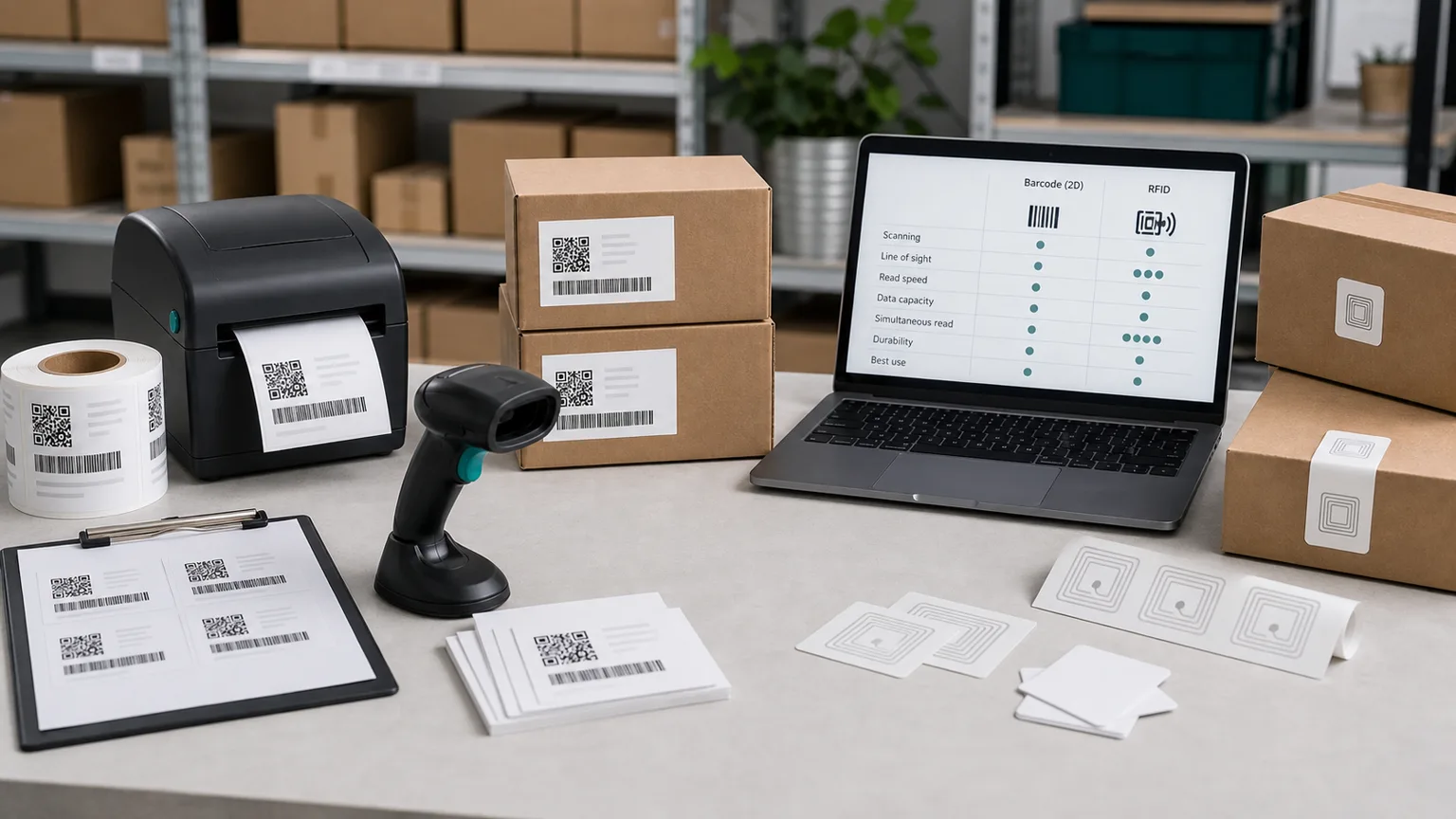
QR Codes and Data Matrix codes are optical 2D barcodes. RFID is different: it uses radio frequency tags and readers and does not require direct line of sight.
Readiness flow
Data, label, scan, print
Start with an audit
Quick comparison
For Sunrise 2027 retail planning, focus first on GS1-compliant 2D barcodes. Consider RFID only when your operational need is bulk inventory reading, apparel tagging, pallet visibility, or non-line-of-sight scanning.
| Format | Best fit | Planning note |
|---|---|---|
| QR Code with GS1 Digital Link | Consumer smartphone engagement and packaging with enough space. | Useful when web-linked product information matters. |
| GS1 DataMatrix | Small labels, regulated product identification, or compact traceability use cases. | Often preferred when space is tight, but partner requirements decide. |
| RFID | Bulk reads, sealed cartons, apparel, and warehouse visibility. | Requires tag cost, reader infrastructure, software, and process redesign. |
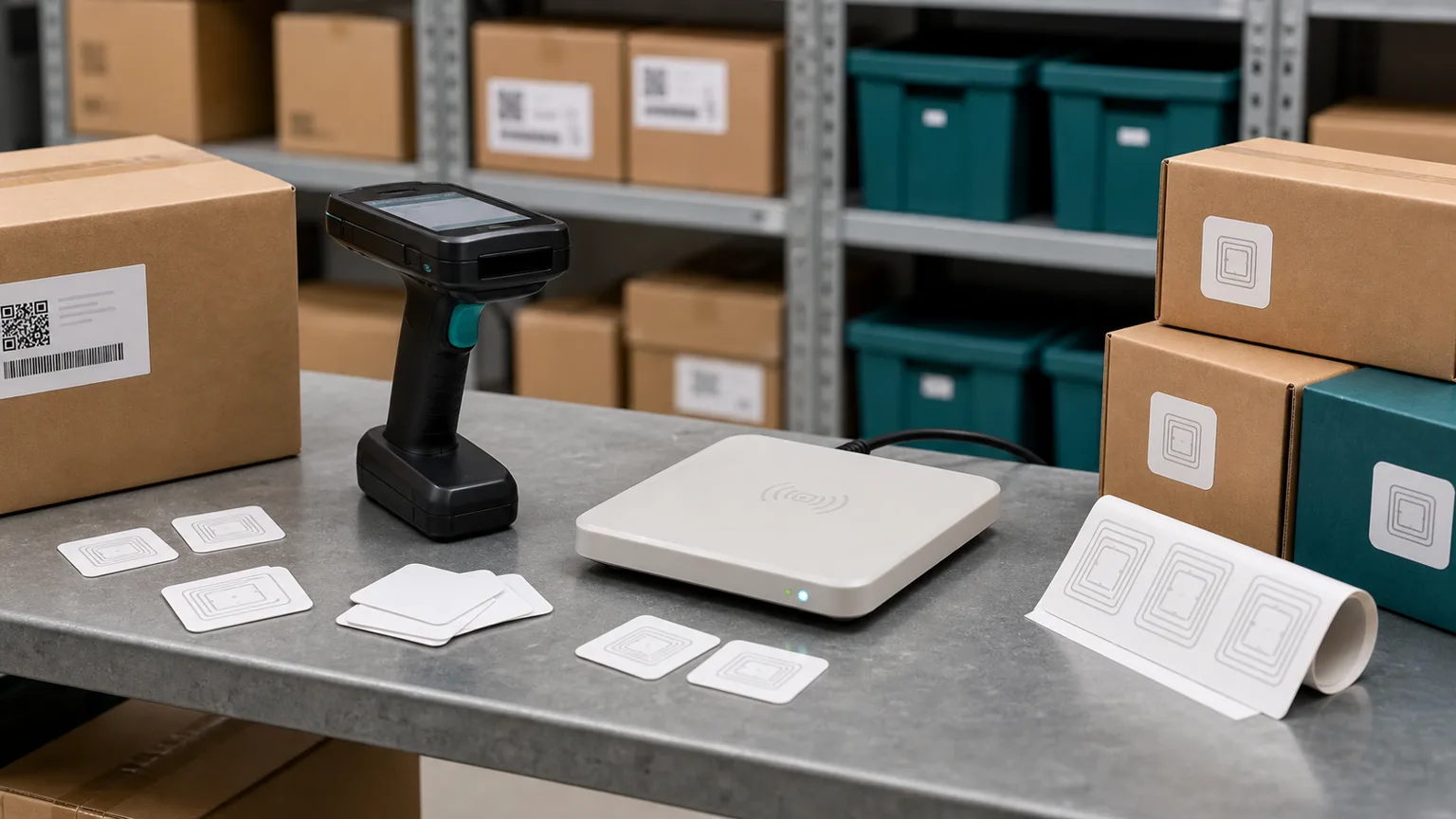
Operational fit
Compare optical scanning with RFID before buying hardware
A 2D barcode path usually starts with print quality and scanner capability. RFID evaluation adds tags, readers, software, and process changes, so it should be tied to a clear warehouse or inventory problem.
Review
Test
Request
Decision criteria
Which format fits your workflow?
Whether consumers should scan it with a phone
Whether a retailer or partner requires a GS1 format
Whether you need lot, batch, expiry, or serial data
Whether you need line-of-sight scanning or bulk radio-frequency reads
Current scanner and printer capabilities
Unsure whether you need QR, Data Matrix, or RFID?
Submit your product type, packaging size, scanning environment, SKU count, and budget range to get an independent format-fit direction.
Hardware implications
Do not treat RFID as a drop-in barcode replacement
A 2D barcode normally needs a capable label printer and a 2D imaging scanner. RFID needs tags, encoders, antennas, readers, software, and process redesign. Do not treat RFID as a drop-in replacement for barcode readiness.
Frequently asked questions
Is every QR code a GS1 barcode? +
No. A generic QR code may just contain a URL. GS1 use requires the correct data structure.
Is RFID part of Sunrise 2027? +
No. RFID may be useful for some inventory workflows, but Sunrise 2027 is about 2D barcode scanning at retail POS.
Which format is best for small packaging? +
Data Matrix is often preferred when space is tight, but final choice depends on partner requirements.
Which format is best for consumers? +
QR Code with GS1 Digital Link is usually more familiar for smartphone scanning.
Can one scanner read all formats? +
A 2D imager can read many 1D and 2D optical codes. It cannot read RFID unless the device also includes RFID hardware.
Get a format-fit direction before buying hardware
Share your product type, packaging size, scanning environment, SKU count, and budget range so the recommendation can start from your actual workflow.
Disclaimer
This site is independent and not affiliated with GS1. It provides educational readiness guidance only, not legal, compliance, marketplace, retailer, or GS1 approval advice.